Smart Locks for Short-Term Rentals: Our Guide to Access and Security
Smart locks are essential for any modern short-term rental. We cover how to choose the right one, automate guest access, and what to do when things inevitably go wrong.
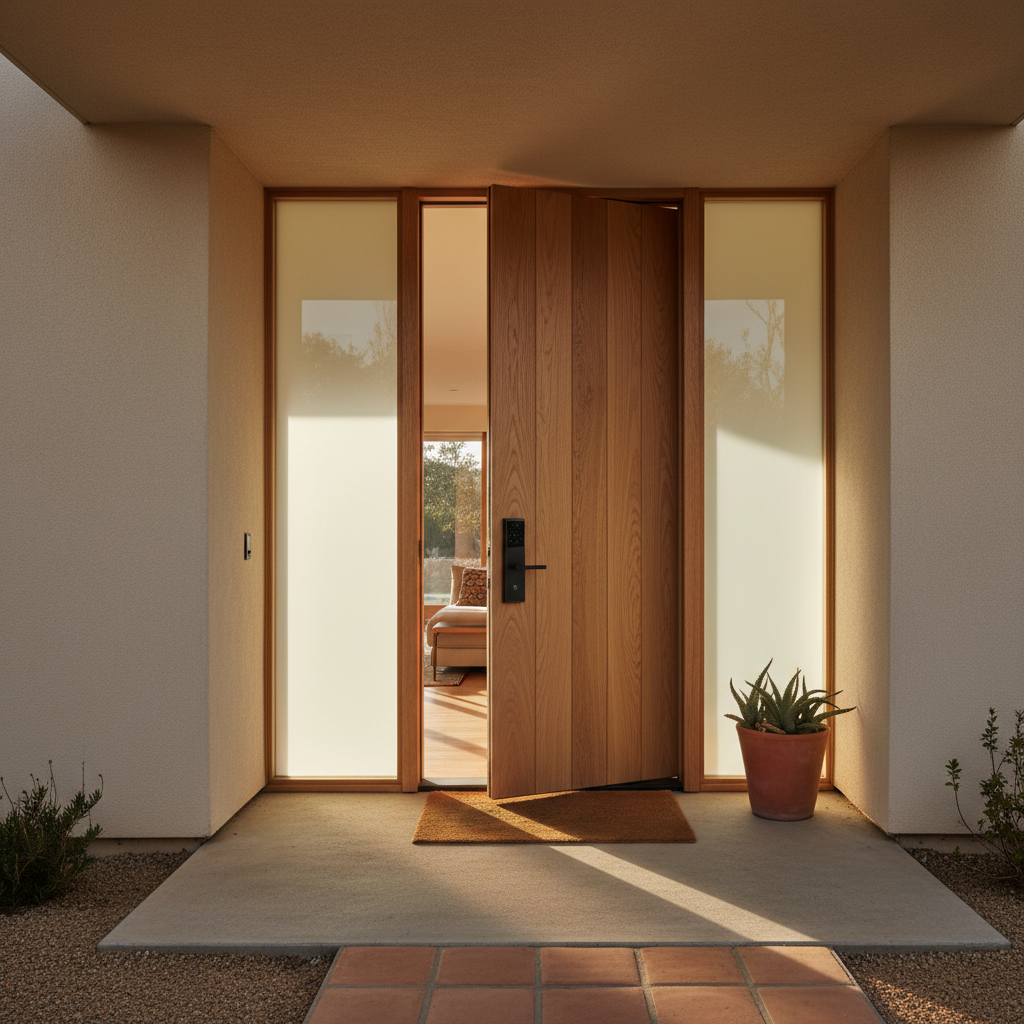
If there’s one piece of technology that has fundamentally improved how short-term rentals operate, it’s the smart lock. The days of hiding a key under the mat or wrestling with a sticky lockbox are, thankfully, behind us. For a modern, premium rental in a market like Los Angeles, secure and seamless guest access isn’t a luxury—it’s a baseline expectation. A reliable smart lock provides security for you, convenience for your guests, and an invaluable audit trail for your business.
We’ve installed and managed hundreds of locks across our portfolio of homes. We’ve seen what works, what breaks, and what homeowners need to know before they choose one. This is our plain-spoken guide to getting your property’s access right.
Why a Smart Lock is Non-Negotiable
Transitioning from a traditional key to a smart lock is one of the single best upgrades a host can make. The benefits go far beyond simply not having to do a key exchange.
Security Through Unique Access Codes
This is the most important feature. With a smart lock, every guest gets their own unique code that is programmed to work only for the duration of their stay. It activates at check-in time on their arrival day and deactivates at check-out time on their departure day.
Compare that to a physical key or a static lockbox code. Keys can be lost or copied. A lockbox code, even if you change it between guests (and many hosts don't), is a blunt instrument. Once someone has it, they have it. Unique, temporary codes eliminate the risk of a previous guest or anyone they shared the code with attempting to access the property after their stay has ended. You also have a unique code for your cleaners, your maintenance team, and for us, your manager.
A Clear Audit Trail
Every high-quality smart lock comes with an activity log, accessible from your phone or computer. It shows you which code was used to enter the property and at what time. This isn’t about micromanaging guests; it’s about having an objective record.
- Resolving Disputes: A guest claims the cleaning crew never showed up before they arrived. The log shows the cleaner's code was used at 1 p.m. for 90 minutes. Dispute resolved.
- Verifying Service: You can confirm your pool service or landscaper arrived as scheduled.
- Security Incidents: In the rare case of an issue, knowing exactly when the door was opened is critical information for you and for the authorities.
The Modern Guest Experience
A guest’s first interaction with your property happens at the front door. Fumbling with a confusing lockbox in the dark or waiting for someone to let them in is a frustrating start to a vacation. An Airbnb smart lock with a clear code and instructions tells the guest that you are a professional host who values their time and security. It’s a seamless, modern check-in process that sets a positive tone for the entire stay.
Choosing the Right Vacation Rental Smart Lock
There are dozens of models on the market, but a few brands have consistently proven reliable for the demands of short-term rental use: Schlage, Yale, and August. The question isn't which is universally "best," but which is the right fit for your property and operational needs.
The Main Players: Schlage, August, and Yale
-
Schlage (Encode Series): The Schlage Encode is a workhorse and one of our most frequent recommendations. It’s a full hardware replacement, meaning you remove your old deadbolt and install the entire unit. Its key advantage is built-in Wi-Fi, which means you don't need a separate plug-in bridge to connect it to the internet. This simplifies setup and reduces a potential point of failure. The hardware is robust, the keypad is responsive, and it’s designed for this kind of heavy use. The
Schlage Encode Airbnbintegration is very popular for a reason. -
August & Yale (Assure Series): These two brands are owned by the same parent company, Assa Abloy, and share a lot of the same excellent software and technology. Their primary distinction is in the installation. The August Wi-Fi Smart Lock is a retrofit device; it installs on the inside of your door, using your existing deadbolt and exterior hardware. This is a fantastic option for renters or for homes where you want to preserve the original, historic look of your front door hardware. The Yale Assure series offers both retrofit and full replacement models, often with a sleek, keyless touchpad. For most August and some Yale models, you will need a small Wi-Fi Bridge that plugs into a nearby outlet to enable remote control and code management.
Key Considerations Before You Buy
- Installation Type: Do you want to keep your existing exterior door hardware? Choose a retrofit lock like August. Are you comfortable with a full replacement for a more integrated look and feel? The Schlage Encode is a top contender.
- Connectivity: A lock with built-in Wi-Fi (like the Schlage Encode or the newest August Wi-Fi) is simpler than one requiring a separate bridge. However, a bridge isn't a dealbreaker; it just needs a power outlet within Bluetooth range of the lock.
- Keypad is a Must: Avoid locks that rely only on a smartphone app. Guests may have a dead phone battery, poor cell service, or simply aren't tech-savvy. A physical keypad on the door is the most reliable and universal method for guest entry.
- Battery Life & Monitoring: All smart locks run on standard batteries (AA or AAA). They last for months, but they will eventually die. Choose a lock with good battery life reports in its app and a clear low-battery indicator. We’ll discuss managing this more below.
Automating Access with a PMS
Here’s where the real magic happens. A smart lock on its own is useful. A smart lock integrated with a Property Management System (PMS) is a powerful automation tool that saves hours and prevents mistakes.
We use platforms like Guesty and Hostaway to manage our properties. Here’s how the automated workflow functions:
- A guest makes a reservation on a platform like Airbnb or Vrbo.
- The booking details are automatically pulled into our PMS.
- Our PMS communicates directly with the smart lock's software (e.g., Schlage, Yale Access).
- It automatically generates a unique 4-8 digit code for that specific reservation.
- A few days before arrival, our system automatically sends the guest a scheduled message with their check-in instructions, including their unique door code.
- That code automatically becomes active at the check-in time and deactivates at the check-out time.
Nobody on our team has to create, copy, or paste a door code. It happens thousands of times a year for us without human intervention. This eliminates human error, ensures codes are never sent too early, and guarantees access is revoked on time. Setting up and maintaining this tech stack is a core part of the professional management services we provide, allowing homeowners to benefit from the efficiency without having to become IT experts.
What Goes Wrong and How to Prepare
Technology is great, until it isn't. Any experienced property manager knows you have to plan for failure. With smart locks, problems are rare but predictable. Here’s what we see and how we plan for it.
The #1 Problem: Dead Batteries
This is, by far, the most common reason for a smart lock lockout. The app will warn you when batteries are low, but you can't rely solely on that.
- Our Protocol: We replace smart lock batteries on a strict, proactive schedule—typically every 6 to 9 months, depending on the lock and usage, regardless of what the battery level indicator says. We use only high-quality lithium batteries, which perform better in temperature fluctuations and last longer than alkaline. This simple policy prevents 99% of battery-related issues.
Wi-Fi or Power Outages
A neighborhood power outage or a Wi-Fi disruption can knock your lock offline. This means you can't remotely unlock it or add new codes.
- The Good News: The lock doesn't stop working. The keypad will still function and accept any codes already programmed into it. This is why automated code generation—which sends the code to the lock well before the guest arrives—is so important. The guest’s code will still work.
- Our Protocol: Every lock also has a master code for our staff programmed directly into it. In the event of an outage, we can still grant access to our team. We also maintain a reliable, high-speed internet service at every property to minimize the chance of this happening.
Guest Error
Some guests will still struggle. They'll enter the wrong code, press the wrong button, or their phone will die with the instructions on it.
- Our Protocol: We provide exceptionally clear, illustrated instructions. We have a 24/7 guest support line that can walk them through it. And, because we have remote access, our team can often see them struggling in the activity log (e.g.,
Tired of managing all this yourself?
We run pricing, guests, cleaning, and compliance for premium LA homes. You keep 80%.